Kuwait Stock Exchange Starts Week with Relative Stability Amid Moderate Trading
Source: Al Jarida (الجريدة) — اقتصاد
Original summary written by Tharwa from the source above. How we source and correct stories
The story in brief
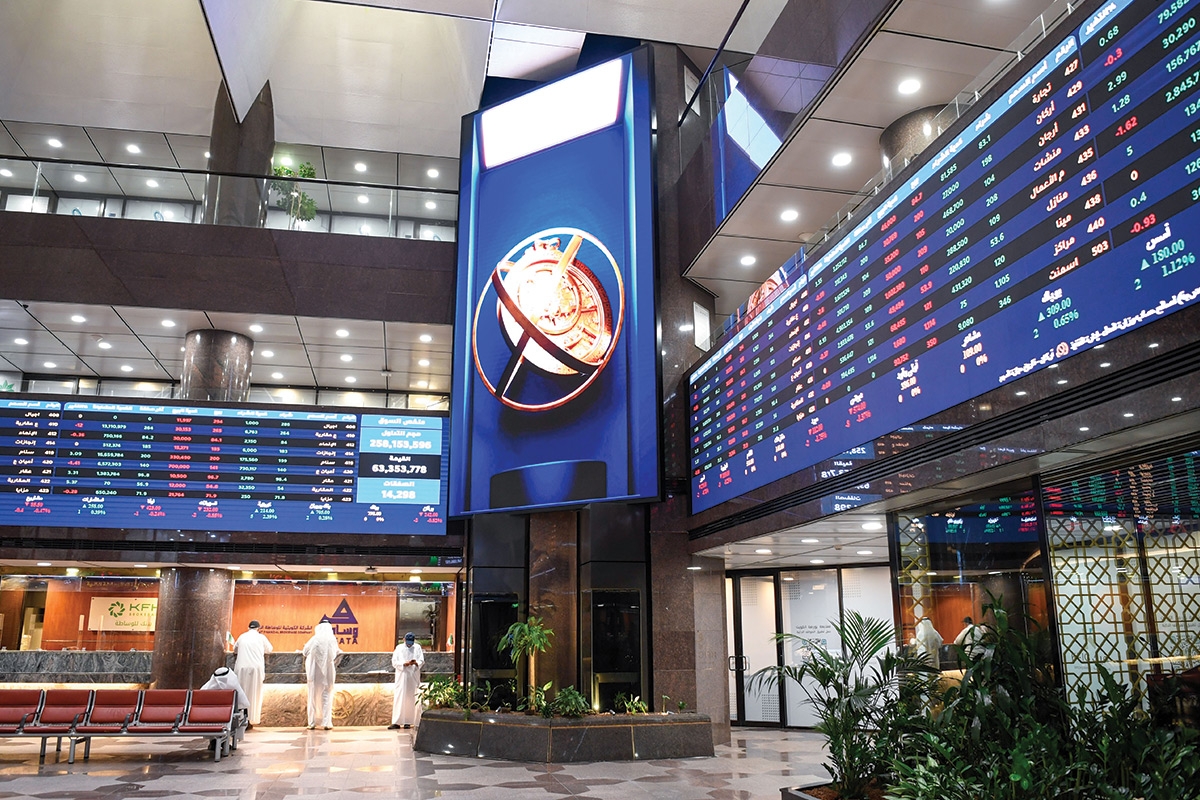
The Kuwait Stock Exchange began the week with relative stability, as market indices showed limited movement. Both the Premier and All-Share indices registered slight increases, while the Main Market Index experienced a marginal decline, resulting in varied performance across indices. Trading activity was calm, with a total liquidity of approximately 60.7 million Kuwaiti Dinars. The Premier Market accounted for 57% of this liquidity, with the remaining 43% going to the Main Market. Traders are closely monitoring ongoing negotiations between the United States and Iran and their potential impact on regional stability and trading levels.
Detailed summary
The Kuwait Stock Exchange commenced the week with relative stability, marked by limited movements across its market indices. The Premier Market Index and the All-Share Index both recorded slight gains, while the Main Market Index saw a minor decrease, leading to a mixed performance overall. Eyes of traders are fixed on the negotiations between the United States and Iran, anticipating potential developments regarding the reopening of the Strait of Hormuz and an end to the regional tensions observed since late February. The market awaits the reflections of these events on trading levels and investor sentiment.
Total liquidity amounted to approximately 60.7 million Kuwaiti Dinars, indicating a relatively calm market activity, which is typical for the beginning of the week before trading intensifies in subsequent sessions. The Premier Market captured the largest share of this liquidity at 57%, with the Main Market securing the remaining 43%.
Among the top gainers, Al-Takhassus stock surged by over 9%, followed by KFHIC with a rise exceeding 5%. Conversely, Tijara stock led the decliners with a decrease of nearly 5%, while Gulf Insurance and A'ayan stocks recorded declines exceeding 4%.
A total of 131 stocks were traded. Prices rose for 49 stocks, declined for 55, and remained stable for 27. Weighted indices increased for 7 sectors, led by the Technology sector with 3.85% and Basic Materials with 1.67%. Meanwhile, indices decreased for 5 sectors, with the Insurance sector leading at 2.21% and Energy at 0.61%. The Healthcare sector's prices remained stable.
In detail, the All-Share Index climbed by 7.64 points, or 0.09%, to reach 8873 points, with 233.8 million shares traded across 15,323 transactions. The Premier Market Index gained 11.15 points, or 0.12%, closing at 9307 points, with 34.4 million Kuwaiti Dinars in liquidity and 91.5 million shares traded through 5810 transactions. The Main Market Index declined by 6.99 points, or 0.08%, to close at 8996 points, with a trading value of 26.3 million Kuwaiti Dinars and 142.2 million shares traded through 9513 transactions.
In terms of value, KFH stock ranked first with 5.98 million Kuwaiti Dinars, reaching a price of 788 fils, followed by Tijara with 3.7 million Kuwaiti Dinars at 159 fils, Al-Takhassus with 3.68 million Kuwaiti Dinars closing at 155 fils, NBK with 2.42 million Kuwaiti Dinars at 864 fils, and KFHIC with 2.3 million Kuwaiti Dinars reaching 181 fils.
Al-Takhassus led the most-gained stocks with a 9.15% increase, trading 24.4 million shares. KFHIC followed with 5.23% and 12.9 million shares, then Mabanee with 3.94% and 2.39 million shares at 132 fils, Systems with 3.85% and 1.75 million shares at 1.024 Kuwaiti Dinars, and Emirates with 3.52% and 3.94 million shares at 147 fils.
On the other hand, Tijara stock recorded a 4.79% decrease, leading the most-declined stocks, with 22.35 million shares traded, closing at 159 fils. Gulf Insurance followed with 4.36% (only 218 shares traded) dropping to 1.600 Kuwaiti Dinars, then A'ayan with 4.22% (47.98 thousand shares traded) closing at 295 fils, Petroleum with 3.99% (only one share traded) dropping to 649 fils, and Hotels with 3.24% (around 20.97 thousand shares traded) closing at 179 fils.
Background & context
This story sits within Kuwait's broader reform agenda and efforts to grow Capital Markets as a pillar of non-oil GDP. The region benefits from supportive energy prices, expansionary government budgets, and rising interest from sovereign wealth funds and foreign investors.
Key numbers & facts
- Trading activity was calm, with a total liquidity of approximately 60.7 million Kuwaiti Dinars.
- The Premier Market accounted for 57% of this liquidity, with the remaining 43% going to the Main Market.
- Total liquidity amounted to approximately 60.7 million Kuwaiti Dinars, indicating a relatively calm market activity, which is typical for the beginning of the week before trading intensifies in subsequent sessions.
- The Premier Market captured the largest share of this liquidity at 57%, with the Main Market securing the remaining 43%.
- Among the top gainers, Al-Takhassus stock surged by over 9%, followed by KFHIC with a rise exceeding 5%.
Key points
- The Kuwait Stock Exchange began the week with relative stability, as market indices showed limited movement.
- Both the Premier and All-Share indices registered slight increases, while the Main Market Index experienced a marginal decline, resulting in varied performance across indices.
- Trading activity was calm, with a total liquidity of approximately 60.7 million Kuwaiti Dinars.
- The Premier Market accounted for 57% of this liquidity, with the remaining 43% going to the Main Market.
Why this matters
This matters because activity in Capital Markets shapes capital flows, hiring and investor sentiment across Kuwait.
Economic & market impact
Potential impact: - Listed GCC equities and indices may see direct trading reaction.
GCC angle
For the rest of the GCC, this is a signal on the pace of activity in Capital Markets. Capital flows and regulatory decisions in one Gulf state typically travel across borders given the similar economic structures and the coordination inside the GCC framework.
Risks & uncertainty
There is uncertainty around the read-through: projections can be moved by swings in oil prices, by US monetary policy tightening that most GCC central banks track via dollar pegs, and by regional geopolitical events. Headline numbers may also be revised when subsequent official data is published.
What happens next?
Watch for upcoming disclosures from listed names in Capital Markets, official macro releases for Kuwait, and any commentary from regulators or sovereign wealth funds. Tharwa will refresh this briefing as new public information becomes available.
Sources used
This is an original Tharwa briefing based on the available source material. Read the full article from the publisher.
Tharwa Weekly
One weekly digest of the GCC economy, companies, markets and investment opportunities — clear and concise.