Muscat Stock Exchange rises by 27.2 points and trades exceed 43.6 million riyals
Source: Oman Daily (عمان) — الاقتصادية
Original summary written by Tharwa from the source above. How we source and correct stories
The story in brief
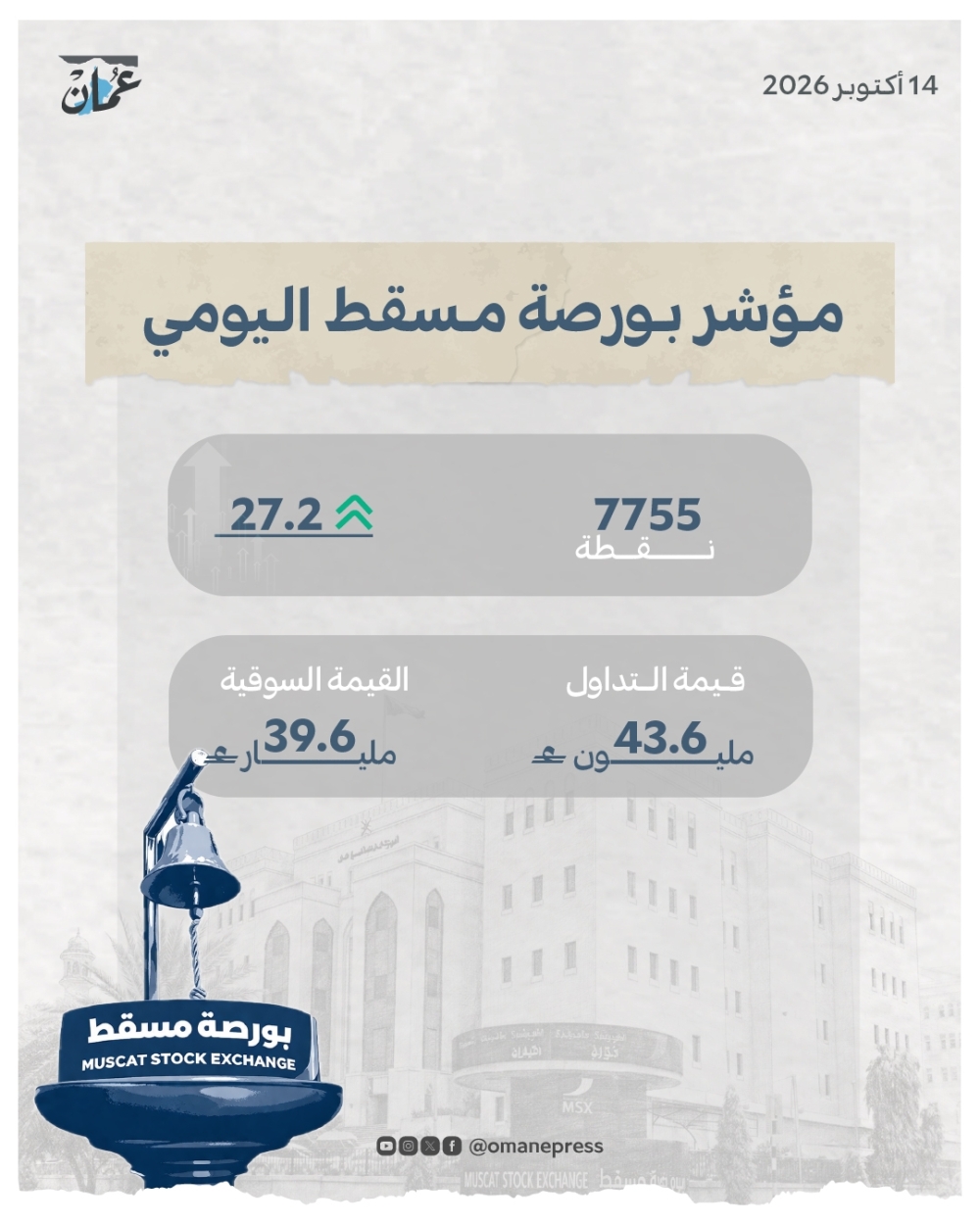
The Muscat Stock Exchange index recorded an increase of 27.2 points, and closed at 7755.30 points. The trading value reached 43.602 million Omani riyals, and the market value reached 39.67 billion riyals. The main indicators rose...
Detailed summary
The Muscat Stock Exchange index recorded an increase of 27.2 points, and closed at 7,755.30 points. The trading value reached 43.602 million Omani riyals, and the market value reached 39.67 billion riyals. The indices rose by 0.4%, the industrial index by 0.3%, the Sharia index by 0.2%, and the services index by 0.1%. Oman Telecom acquired the trading value of 14 million. riyals, Sohar International Bank with 8.6 million riyals, and OQ Basic Industries - Salalah Free Zone with 5.9 million riyals. National Aluminum Products recorded the highest percentage of increase among the traded companies by 13.6%, and its shares closed at 108 baisas, Oman Oil by 6.9%, and its shares closed at riyals and 550 baisas, and Muscat Finance by 4.6%, and its shares closed at 67 baisas. Highlights Losers: Al Madina Investment Holding was the most prominent loser during the session with a decline of 4.9%, and its stock closed at 77 baisas, followed by Oman Financial Services by 3.2%, and its stock closed at 148 baisas, and Oman and Emirates Holding by 1.6%, and its stock closed at 120 baisas.
Omani investors bought, as the percentage of their purchases amounted to 86.8% compared to 84.6% of their sales. The purchase value reached 37.8 million riyals and the sale value was 36.9 million riyals. The purchase value of non-Omanis reached 5.7 million riyals, or 13.1%. Their selling value reached 6.6 million riyals, or 15.3%. The net non-Omani investment decreased to 949 thousand riyals, or 2.1%.
Background & context
This story sits within Oman's broader reform agenda and efforts to grow Capital Markets as a pillar of non-oil GDP. The region benefits from supportive energy prices, expansionary government budgets, and rising interest from sovereign wealth funds and foreign investors.
Key numbers & facts
- The trading value reached 43.602 million Omani riyals, and the market value reached 39.67 billion riyals.
- The trading value reached 43.602 million Omani riyals, and the market value reached 39.67 billion riyals.
- The indices rose by 0.4%, the industrial index by 0.3%, the Sharia index by 0.2%, and the services index by 0.1%.
- Oman Telecom acquired the trading value of 14 million. riyals, Sohar International Bank with 8.6 million riyals, and OQ Basic Industries - Salalah Free Zone with 5.9 million riyals.
- National Aluminum Products recorded the highest percentage of increase among the traded companies by 13.6%, and its shares closed at 108 baisas, Oman Oil by 6.9%, and its shares closed at riyals and 550 baisas, and Muscat Finance by 4.6%, and its shares closed at 67 baisas.
Key points
- The Muscat Stock Exchange index recorded an increase of 27.2 points, and closed at 7755.30 points.
- The trading value reached 43.602 million Omani riyals, and the market value reached 39.67 billion riyals.
- The main indicators rose...
- The Muscat Stock Exchange index recorded an increase of 27.2 points, and closed at 7,755.30 points.
Why this matters
This matters because activity in Capital Markets shapes capital flows, hiring and investor sentiment across Oman.
Economic & market impact
Potential impact: - Listed GCC equities and indices may see direct trading reaction.
GCC angle
For the rest of the GCC, this is a signal on the pace of activity in Capital Markets. Capital flows and regulatory decisions in one Gulf state typically travel across borders given the similar economic structures and the coordination inside the GCC framework.
Risks & uncertainty
There is uncertainty around the read-through: projections can be moved by swings in oil prices, by US monetary policy tightening that most GCC central banks track via dollar pegs, and by regional geopolitical events. Headline numbers may also be revised when subsequent official data is published.
What happens next?
Watch for upcoming disclosures from listed names in Capital Markets, official macro releases for Oman, and any commentary from regulators or sovereign wealth funds. Tharwa will refresh this briefing as new public information becomes available.
Sources used
This is an original Tharwa briefing based on the available source material. Read the full article from the publisher.
Tharwa Weekly
One weekly digest of the GCC economy, companies, markets and investment opportunities — clear and concise.