OPEC+ Warns Against Energy Infrastructure Attacks, Increases Output
Source: Asharq Al-Awsat
Original summary written by Tharwa from the source above. How we source and correct stories
The story in brief
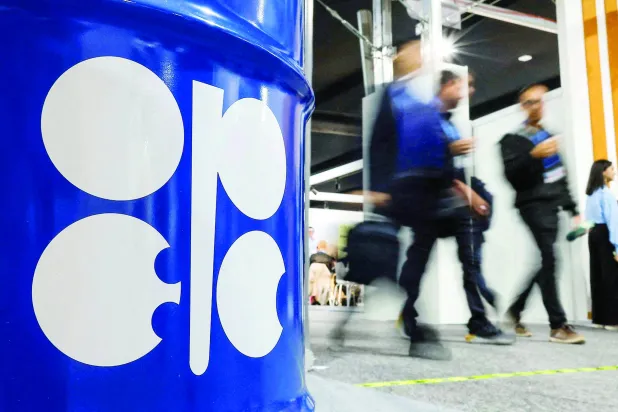
The OPEC+ Joint Ministerial Monitoring Committee (JMMC) warned against attacks on energy infrastructure, stating that restoring damaged assets is costly and time-consuming, affecting overall supply availability. In a separate meeting, seven member countries—Saudi Arabia, Russia, Iraq, Kuwait, Kazakhstan, Algeria, and Oman—agreed to increase production quotas by approximately 188,000 barrels per day for September. The committee emphasized the pivotal role of the Declaration of Cooperation in stabilizing global energy markets and stressed that any actions undermining energy supply security, including attacks or disruptions to international maritime routes, heighten market volatility and weaken collective efforts.
Detailed summary
The Joint Ministerial Monitoring Committee (JMMC) of the OPEC+ alliance, comprising Saudi Arabia, Russia, Iraq, Kuwait, Kazakhstan, Nigeria, Algeria, and Venezuela, issued a warning regarding the repercussions of attacks on energy infrastructure. The committee highlighted that rehabilitating damaged energy assets to their full capacity is both costly and time-consuming, consequently impacting the overall availability of supplies.
A press statement from the Organization of the Petroleum Exporting Countries (OPEC) reported that the committee, which held its 67th meeting via video conference yesterday (Sunday), reviewed current market conditions. It reaffirmed the crucial role of the Declaration of Cooperation in supporting the stability of global energy markets.
The JMMC stressed that any actions that undermine the security of energy supplies, whether through attacks on infrastructure or the disruption of international maritime passages, increase market volatility. Such actions, the committee added, weaken the collective efforts undertaken within the framework of the Declaration of Cooperation to support market stability.
Regarding production quotas, seven member countries of the OPEC+ alliance—Saudi Arabia, Russia, Iraq, Kuwait, Kazakhstan, Algeria, and Oman—decided in a separate meeting on Sunday to increase production quotas by approximately 188,000 barrels per day for the upcoming month of September. These seven countries reiterated their commitment to market stability.
Background & context
This story sits within Saudi Arabia's broader reform agenda and efforts to grow Oil & Gas as a pillar of non-oil GDP. The region benefits from supportive energy prices, expansionary government budgets, and rising interest from sovereign wealth funds and foreign investors.
Key numbers & facts
- No specific figures were provided in the available source. See the original publisher for detailed numbers.
Key points
- The OPEC+ Joint Ministerial Monitoring Committee (JMMC) warned against attacks on energy infrastructure, stating that restoring damaged assets is costly and time-consuming, affecting overall supply availability.
- In a separate meeting, seven member countries—Saudi Arabia, Russia, Iraq, Kuwait, Kazakhstan, Algeria, and Oman—agreed to increase production quotas by approximately 188,000 barrels per day for September.
- The committee emphasized the pivotal role of the Declaration of Cooperation in stabilizing global energy markets and stressed that any actions undermining energy supply security, including attacks or disruptions to international maritime routes, heighten market volatility and weaken collective efforts.
- The Joint Ministerial Monitoring Committee (JMMC) of the OPEC+ alliance, comprising Saudi Arabia, Russia, Iraq, Kuwait, Kazakhstan, Nigeria, Algeria, and Venezuela, issued a warning regarding the repercussions of attacks on energy infrastructure.
Why this matters
This matters because activity in Oil & Gas shapes capital flows, hiring and investor sentiment across Saudi Arabia.
Economic & market impact
Potential impact: - Oil & gas majors and oilfield services may react to volume, price or policy signals.
GCC angle
For the rest of the GCC, this is a signal on the pace of activity in Oil & Gas. Capital flows and regulatory decisions in one Gulf state typically travel across borders given the similar economic structures and the coordination inside the GCC framework.
Risks & uncertainty
There is uncertainty around the read-through: projections can be moved by swings in oil prices, by US monetary policy tightening that most GCC central banks track via dollar pegs, and by regional geopolitical events. Headline numbers may also be revised when subsequent official data is published.
What happens next?
Watch for upcoming disclosures from listed names in Oil & Gas, official macro releases for Saudi Arabia, and any commentary from regulators or sovereign wealth funds. Tharwa will refresh this briefing as new public information becomes available.
Sources used
This is an original Tharwa briefing based on the available source material. Read the full article from the publisher.
Tharwa Weekly
One weekly digest of the GCC economy, companies, markets and investment opportunities — clear and concise.