15th Gulf Conference on Human Capital Productivity Kicks Off in Salalah
Source: Oman Daily (عمان) — الاقتصادية
Original summary written by Tharwa from the source above. How we source and correct stories
The story in brief
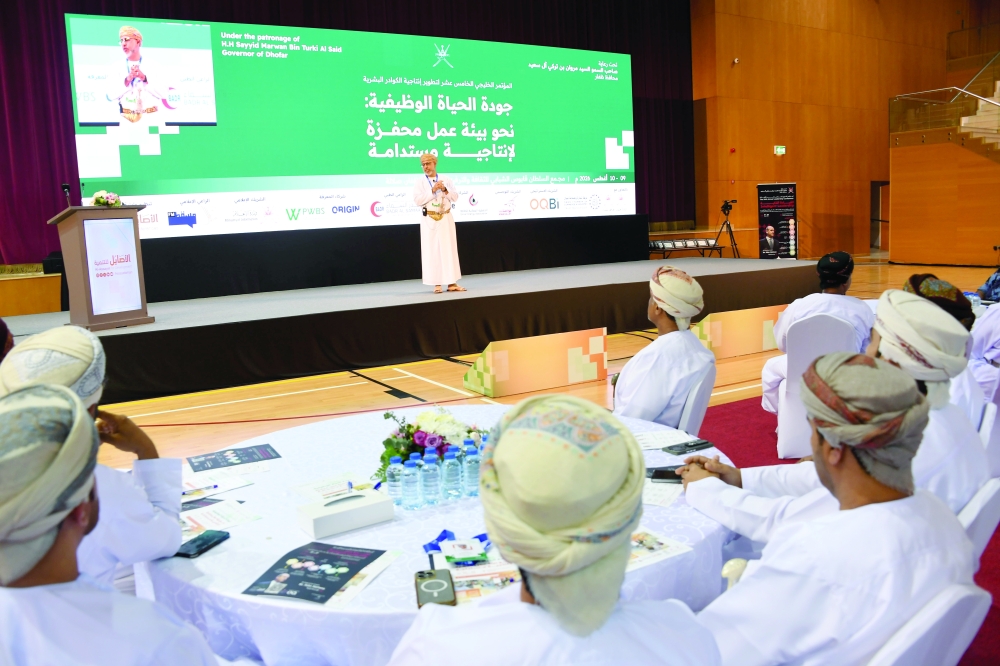
The 15th Gulf Conference on Human Capital Productivity has commenced in Salalah, under the patronage of His Highness Sayyid Marwan bin Turki Al Said, Governor of Dhofar. Organized by Al Asayel Conferences in cooperation with the Ministry of Labour, Dhofar Governor's Office, and Oman Chamber of Commerce and Industry (Dhofar branch), with strategic partnership from OQ Basic Industries, the two-day event at Sultan Qaboos Youth Complex for Culture and Entertainment aims to discuss strategic axes for enhancing productivity, job quality, and employee well-being amid rapid economic and technological shifts. The conference focuses on fostering stimulating work environments and sustainable productivity.
Detailed summary
The 15th Gulf Conference for Developing Human Capital Productivity commenced today at the Sultan Qaboos Youth Complex for Culture and Entertainment in Salalah. Organized by Al Asayel Conferences in cooperation with the Ministry of Labour, the Dhofar Governor's Office, and the Dhofar branch of the Oman Chamber of Commerce and Industry, and with a strategic partnership from OQ Basic Industries, the two-day conference is held under the patronage of His Highness Sayyid Marwan bin Turki Al Said, Governor of Dhofar.
Nayef bin Hamed Bait Fadhel, a member of the conference organizing committee, stated that the conference is timely given the accelerating economic and technological transformations, and the growing need to build work environments capable of balancing employee well-being with increased productivity, recognizing human capital as the cornerstone of sustainable development. The conference title, 'Quality of Work Life Towards a Stimulating Work Environment… Sustainable Productivity,' reflects a modern global trend emphasizing that productivity is no longer solely measured by output volume, but also by institutions' ability to foster a positive work culture, human-centric leadership, and an environment that encourages creativity and innovation to achieve sustainability and enhance competitiveness.
Bait Fadhel highlighted that global experiences demonstrate institutions investing in the quality of work life achieve higher productivity, increased innovation rates, and reduced employee turnover and burnout. Such institutions also become more adept at attracting and retaining talent, directly contributing to national economic growth. The conference includes several strategic themes addressing rapid changes in business environments to build more competitive and sustainable institutions. These themes cover the transition to smart work environments, measuring productivity indicators, promoting human leadership's role in establishing work-life quality, and emphasizing mental health and job well-being as essential drivers for sustainable productivity.
The conference aims to promote the concept of sustainability within institutions, shed light on the relationship between human capital and long-term performance, highlight job well-being as a strategic factor, and identify methods for measuring productivity and quality of work life. It also seeks to develop a practical roadmap for integrating job well-being and productivity, anticipate the future of work environments amidst digital transformation, and facilitate the exchange of regional and international best practices.
The first day's program included sessions discussing investment in human beings as a pillar of sustainable institutional and economic development, linking productivity to the quality of work life, the employee experience in the era of transformation and its changes, and positive intelligence in the workplace. A panel discussion titled 'Is Job Well-being a Necessity or a Cost?' explored job quality, productivity, and sustainability, alongside a session on tools for measuring productivity and job well-being. The second day will feature specialized sessions focusing on achieving excellence, boosting productivity, and reviewing practical experiences in enhancing productivity and institutional excellence.
The conference targets general managers in both public and private sectors, human resources and training managers, officials, specialists, young leaders, production line managers across various specializations and sectors, and employees in general in both public and private sectors.
Background & context
This story sits within Oman's broader reform agenda and efforts to grow the economy as a pillar of non-oil GDP. The region benefits from supportive energy prices, expansionary government budgets, and rising interest from sovereign wealth funds and foreign investors.
Key numbers & facts
- No specific figures were provided in the available source. See the original publisher for detailed numbers.
Key points
- The 15th Gulf Conference on Human Capital Productivity has commenced in Salalah, under the patronage of His Highness Sayyid Marwan bin Turki Al Said, Governor of Dhofar.
- Organized by Al Asayel Conferences in cooperation with the Ministry of Labour, Dhofar Governor's Office, and Oman Chamber of Commerce and Industry (Dhofar branch), with strategic partnership from OQ Basic Industries, the two-day event at Sultan Qaboos Youth Complex for Culture and Entertainment aims to discuss strategic axes for enhancing productivity, job quality, and employee well-being amid rapid economic and technological shifts.
- The conference focuses on fostering stimulating work environments and sustainable productivity.
- The 15th Gulf Conference for Developing Human Capital Productivity commenced today at the Sultan Qaboos Youth Complex for Culture and Entertainment in Salalah.
Why this matters
This matters because activity in GCC markets shapes capital flows, hiring and investor sentiment across Oman.
Economic & market impact
Potential ripple effects across GCC equities, banking activity and investor confidence. Watch listed regional names exposed to the story.
GCC angle
For the rest of the GCC, this is a signal on the pace of activity in the sector. Capital flows and regulatory decisions in one Gulf state typically travel across borders given the similar economic structures and the coordination inside the GCC framework.
Risks & uncertainty
There is uncertainty around the read-through: projections can be moved by swings in oil prices, by US monetary policy tightening that most GCC central banks track via dollar pegs, and by regional geopolitical events. Headline numbers may also be revised when subsequent official data is published.
What happens next?
Watch for upcoming disclosures from listed names in the sector, official macro releases for Oman, and any commentary from regulators or sovereign wealth funds. Tharwa will refresh this briefing as new public information becomes available.
Sources used
This is an original Tharwa briefing based on the available source material. Read the full article from the publisher.
Tharwa Weekly
One weekly digest of the GCC economy, companies, markets and investment opportunities — clear and concise.