“Made in the Gulf 2026” in Manama discusses expanding investments and raising the competitiveness of Gulf products
Source: Oman Daily (عمان) — الاقتصادية
Original summary written by Tharwa from the source above. How we source and correct stories
The story in brief
The activities of the first edition of the “Made in the Gulf 2026” Forum and Exhibition were launched today in the Kingdom of Bahrain, under the generous patronage of His Majesty King Hamad bin Isa Al Khalifa, King of the Kingdom of Bahrain, and in the presence of His Highness...
Detailed summary
The activities of the first edition of the “Made in the Gulf 2026” Forum and Exhibition were launched today in the Kingdom of Bahrain, under the generous patronage of His Majesty King Hamad bin Isa Al Khalifa, King of the Kingdom of Bahrain, and in the presence of His Royal Highness Prince Salman bin Hamad Al Khalifa, the Crown Prince and Prime Minister, and ministers, officials, decision-makers, industry leaders, investors, experts and companies from the Gulf Cooperation Council countries. The forum discusses the future of Gulf industry and opportunities for developing value chains, increasing investments and industrial partnerships, and raising the competitiveness of products. Gulf countries and their access to regional and global markets, in addition to employing modern technologies, innovation and developing competencies in developing the industrial sector. His Excellency Jassim bin Mohammed Al Budawi, Secretary General of the Cooperation Council for the Arab States of the Gulf, said: The Council countries include more than 22 thousand factories in which about 1.7 million workers work, while manufacturing industries contribute 13 percent of the gross domestic product. His Excellency pointed out that Gulf industrial work contributed to the unification of a number of
Industrial legislation and the adoption of the industry strategy 2022-2030, supporting the national product and enhancing integration between supply chains, explaining that the GCC countries are working to develop 20 joint Gulf industrial investment opportunities, of which five opportunities have been completed in the first phase. For his part, His Excellency Abdullah bin Adel Fakhro, Minister of Industry and Trade of the Kingdom of Bahrain, indicated in his speech the capabilities, resources and expertise that qualify it to expand the manufacturing base and build more integrated value chains, noting that the size of the economy of the GCC countries together is about 2.4 trillion dollars, while intra-trade in goods between them amounts to about 146 billion dollars. He explained that the imports of the GCC countries exceed 600 billion dollars annually, which provides opportunities to increase the share of Gulf products in the markets and convert a larger part of the demand into production, investments and new factories, and benefit from the infrastructure, logistics, capital and human capabilities available in the GCC countries. The opening program witnessed a high-level session on the future of industry and energy in the GCC countries, with His Royal Highness
Prince Abdulaziz bin Salman Al Saud, Minister of Energy and Minister of Industry and Mineral Resources of the Kingdom of Saudi Arabia, and His Excellency Sheikh Salman bin Khalifa Al Khalifa, Minister of Finance and National Economy of the Kingdom of Bahrain, discussed the most prominent transformations affecting productive sectors and ways to increase their ability to grow and compete. The session focused on the importance of localizing industries related to vital sectors, enhancing the flexibility of supply chains, and linking the industrial, energy and mining sectors within more integrated systems that contribute to maximizing added value and taking advantage of resources and capabilities. The session also addressed the role of innovation, research and development in supporting industrial expansion, and the importance of aligning investment plans with the needs of the labor market, by determining the type of competencies and specializations required and working with universities and training institutes to prepare programs that are compatible with the needs of the industrial, energy and mining sectors, in a way that prepares cadres for projects and expansions.
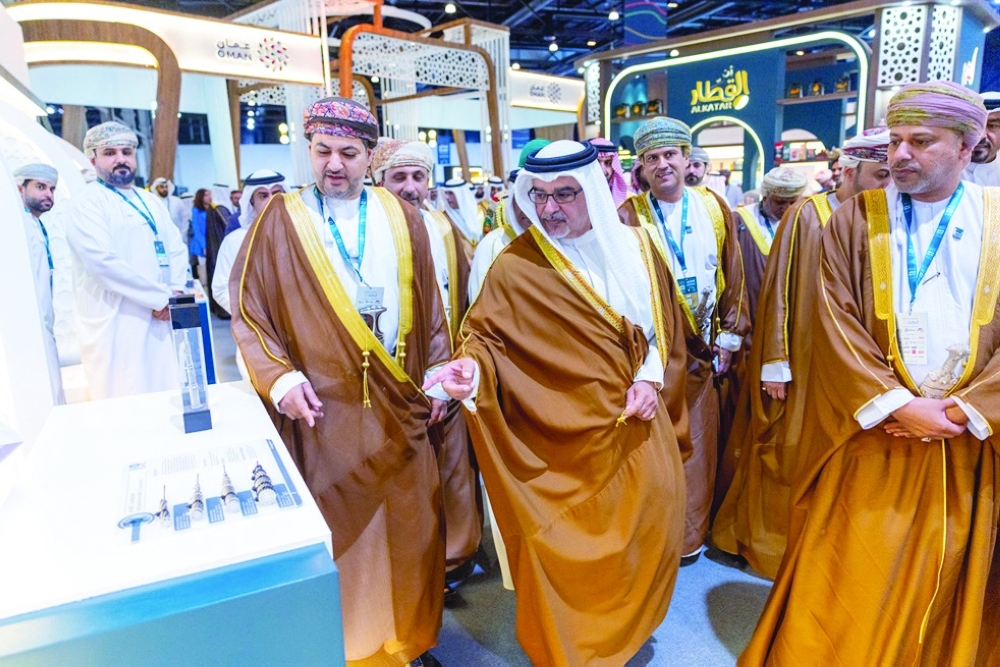
Then, His Royal Highness the Crown Prince and Prime Minister of the Kingdom of Bahrain opened the exhibition accompanying the forum, where he reviewed the products, technologies and industrial solutions offered by Gulf companies that reflect the diversity of productive sectors and the development of their capabilities. The exhibition included 122 companies from the Gulf Cooperation Council countries, led by the Sultanate of Oman with 29 companies, followed by the United Arab Emirates with 24 companies, the Kingdom of Bahrain and the State of Qatar with 20 companies each, and the Kingdom of Saudi Arabia. With 15 companies, and the State of Kuwait with 14 companies. The Sultanate of Oman participated in the forum and exhibition, represented by the Ministry of Trade, Industry and Investment Promotion and the Oman Chamber of Commerce and Industry, through 29 Omani companies representing a group of industrial and productive sectors. With the aim of highlighting national products and capabilities, opening new opportunities for companies to expand and export, building partnerships, and strengthening their connection to Gulf and regional value chains. Omani companies diversify between the sectors of petrochemicals, polymers, plastics, iron, steel, metals, and industries.
Food and pharmaceutical, oils and petroleum products, cables and electrical industries, aluminium, porcelain, marble and building materials, water treatment and desalination, batteries and technology, logistics services and other manufacturing industries. His Excellency Engineer Ghaleb bin Saeed Al-Maamari, Undersecretary of the Ministry of Trade and Industry and Investment Promotion for Trade and Industry, confirmed that the Omani companies in “Made in the Gulf 2026” reflect the diversity of the national industry and the development of its production and export capabilities, and provides an opportunity to showcase Omani products and solutions to The Gulf business community and investors. His Excellency added: It aims to build new commercial and industrial partnerships, explore contracting, distribution and export opportunities, link national companies to regional value chains, and benefit from the Gulf market as a platform to launch into broader markets. The forum’s activities witnessed the honoring of three Omani industrial facilities with the Gulf Industrial Excellence Award; The National Pharmaceutical Industries Company won in the large establishments category for the pharmaceutical industries sector.
Background & context
This story sits within Bahrain's broader reform agenda and efforts to grow the economy as a pillar of non-oil GDP. The region benefits from supportive energy prices, expansionary government budgets, and rising interest from sovereign wealth funds and foreign investors.
Key numbers & facts
- His Excellency Jassim bin Mohammed Al Budawi, Secretary General of the Cooperation Council for the Arab States of the Gulf, said: The Council countries include more than 22 thousand factories in which about 1.7 million workers work, while manufacturing industries contribute 13 percent of the gross domestic product.
- For his part, His Excellency Abdullah bin Adel Fakhro, Minister of Industry and Trade of the Kingdom of Bahrain, indicated in his speech the capabilities, resources and expertise that qualify it to expand the manufacturing base and build more integrated value chains, noting that the size of the economy of the GCC countries together is about 2.4 trillion dollars, while intra-trade in goods between them amounts to about 146 billion dollars.
- He explained that the imports of the GCC countries exceed 600 billion dollars annually, which provides opportunities to increase the share of Gulf products in the markets and convert a larger part of the demand into production, investments and new factories, and benefit from the infrastructure, logistics, capital and human capabilities available in the GCC countries.
Key points
- The activities of the first edition of the “Made in the Gulf 2026” Forum and Exhibition were launched today in the Kingdom of Bahrain, under the generous patronage of His Majesty King Hamad bin Isa Al Khalifa, King of the Kingdom of Bahrain, and in the presence of His Highness...
- The activities of the first edition of the “Made in the Gulf 2026” Forum and Exhibition were launched today in the Kingdom of Bahrain, under the generous patronage of His Majesty King Hamad bin Isa Al Khalifa, King of the Kingdom of Bahrain, and in the presence of His Royal Highness Prince Salman bin Hamad Al Khalifa, the Crown Prince and Prime Minister, and ministers, officials, decision-makers, industry leaders, investors, experts and companies from the Gulf Cooperation Council countries.
- The forum discusses the future of Gulf industry and opportunities for developing value chains, increasing investments and industrial partnerships, and raising the competitiveness of products.
- Gulf countries and their access to regional and global markets, in addition to employing modern technologies, innovation and developing competencies in developing the industrial sector.
Why this matters
This matters because activity in GCC markets shapes capital flows, hiring and investor sentiment across Bahrain.
Economic & market impact
Potential ripple effects across GCC equities, banking activity and investor confidence. Watch listed regional names exposed to the story.
GCC angle
For the rest of the GCC, this is a signal on the pace of activity in the sector. Capital flows and regulatory decisions in one Gulf state typically travel across borders given the similar economic structures and the coordination inside the GCC framework.
Risks & uncertainty
There is uncertainty around the read-through: projections can be moved by swings in oil prices, by US monetary policy tightening that most GCC central banks track via dollar pegs, and by regional geopolitical events. Headline numbers may also be revised when subsequent official data is published.
What happens next?
Watch for upcoming disclosures from listed names in the sector, official macro releases for Bahrain, and any commentary from regulators or sovereign wealth funds. Tharwa will refresh this briefing as new public information becomes available.
Sources used
This is an original Tharwa briefing based on the available source material. Read the full article from the publisher.
Tharwa Weekly
One weekly digest of the GCC economy, companies, markets and investment opportunities — clear and concise.