Kuwait Spends 143.5 Million Dinars on Food and Construction Subsidies in H1
Source: The Times Kuwait
Original summary written by Tharwa from the source above. How we source and correct stories
The story in brief
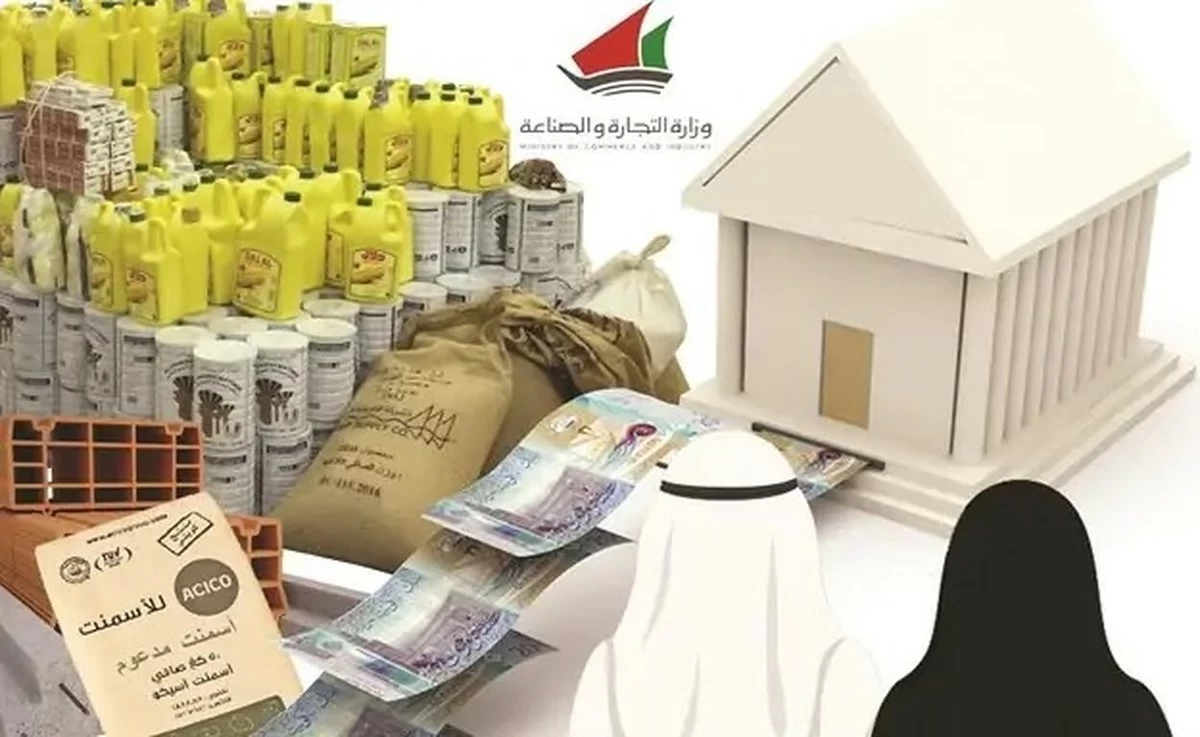
Kuwait's total subsidy bill for food and construction materials reached 143.5 million dinars in the first half of 2026, according to the Ministry of Commerce and Industry. Basic food supplies accounted for the largest share at 77.43 million dinars (53.96%), while construction materials received 56.75 million dinars (39.55%). Subsidies for milk and infant formula amounted to 9.23 million dinars (6.43%). The subsidized food list includes 89 items, and with an additional 27 discounted products, approximately 116 items are available to Kuwaiti citizens via ration cards. By the end of June, around 279,753 cumulative ration cards were in use, benefiting about 2.396 million people by the end of May.
Detailed summary
Kuwait's total subsidy bill for food and construction materials reached 143.5 million dinars during the first half of 2026, as per official figures from the Ministry of Commerce and Industry. Basic food supplies accounted for the largest share, totaling 77.43 million dinars, which represents 53.96 percent of the total. Subsidies for construction materials amounted to 56.75 million dinars, making up 39.55 percent, while milk and infant formula subsidies stood at 9.23 million dinars, or 6.43 percent.
The highest monthly subsidy bill was recorded in January at 31.3 million dinars. This was followed by February with 27.4 million dinars, June with 24.3 million dinars, April with 21.3 million dinars, March with 19.8 million dinars, and May with 19.2 million dinars.
Subsidies for basic commodities peaked at 15.6 million dinars in both January and June. They were 14.7 million dinars in February, 9.7 million dinars in March, 11.3 million dinars in April, and 10.3 million dinars in May. For milk and infant formula, subsidies reached their highest level in June at 1.9 million dinars. This compares to 1.3 million dinars in January, 1.5 million dinars each in February and March, and 1.4 million dinars in April and May.
Construction material subsidies totaled 14.3 million dinars in January, then decreased to 11 million dinars in February. They were approximately 8.5 million dinars in both March and April, 7.4 million dinars in May, and 6.7 million dinars in June.
The number of cumulative ration cards reached approximately 279,753 by the end of June. Around 2.396 million people were benefiting from the ration system by the end of May. The subsidized food list includes 89 items, covering basic products such as rice, lentils, sugar, vegetable oil, milk powder, infant formula, chicken, and tomato paste. An additional 27 discounted products bring the total number of subsidized and discounted items available to Kuwaiti citizens through ration cards to about 116.
Background & context
This story sits within Kuwait's broader reform agenda and efforts to grow Real estate as a pillar of non-oil GDP. The region benefits from supportive energy prices, expansionary government budgets, and rising interest from sovereign wealth funds and foreign investors.
Key numbers & facts
- Kuwait's total subsidy bill for food and construction materials reached 143.5 million dinars in the first half of 2026, according to the Ministry of Commerce and Industry.
- Basic food supplies accounted for the largest share at 77.43 million dinars (53.96%), while construction materials received 56.75 million dinars (39.55%).
- Subsidies for milk and infant formula amounted to 9.23 million dinars (6.43%).
- By the end of June, around 279,753 cumulative ration cards were in use, benefiting about 2.396 million people by the end of May.
- Kuwait's total subsidy bill for food and construction materials reached 143.5 million dinars during the first half of 2026, as per official figures from the Ministry of Commerce and Industry.
Key points
- Kuwait's total subsidy bill for food and construction materials reached 143.5 million dinars in the first half of 2026, according to the Ministry of Commerce and Industry.
- Basic food supplies accounted for the largest share at 77.43 million dinars (53.96%), while construction materials received 56.75 million dinars (39.55%).
- Subsidies for milk and infant formula amounted to 9.23 million dinars (6.43%).
- The subsidized food list includes 89 items, and with an additional 27 discounted products, approximately 116 items are available to Kuwaiti citizens via ration cards.
Why this matters
This matters because activity in Real estate, Capital Markets, Food & Agriculture shapes capital flows, hiring and investor sentiment across Kuwait.
Economic & market impact
Potential impact: - Real estate developers and brokers may see changing demand and pricing. - Listed GCC equities and indices may see direct trading reaction. - Food producers, retailers and importers may see margin and supply effects.
GCC angle
For the rest of the GCC, this is a signal on the pace of activity in Real estate, Capital Markets, Food & Agriculture. Capital flows and regulatory decisions in one Gulf state typically travel across borders given the similar economic structures and the coordination inside the GCC framework.
Risks & uncertainty
There is uncertainty around the read-through: projections can be moved by swings in oil prices, by US monetary policy tightening that most GCC central banks track via dollar pegs, and by regional geopolitical events. Headline numbers may also be revised when subsequent official data is published.
What happens next?
Watch for upcoming disclosures from listed names in Real estate, Capital Markets, official macro releases for Kuwait, and any commentary from regulators or sovereign wealth funds. Tharwa will refresh this briefing as new public information becomes available.
Sources used
This is an original Tharwa briefing based on the available source material. Read the full article from the publisher.
Tharwa Weekly
One weekly digest of the GCC economy, companies, markets and investment opportunities — clear and concise.