Riyadh Unveils Master Plan for Northeast Development
Source: Asharq Al-Awsat English
Original summary written by Tharwa from the source above. How we source and correct stories
The story in brief
The Royal Commission for Riyadh City has finalized the initial master plan for northeast Riyadh, spanning approximately 456 square kilometers. This comprehensive framework outlines urban expansion for one of the capital's key development areas over the next decade. Positioned strategically and linked to King Khalid International Airport, Al-Sulai Valley, Dammam Road, and Al-Janadriyah Road, the plan focuses on integrated land use, phased expansion, and the creation of fully serviced communities. This initiative aims to balance residential, economic, recreational, and natural uses, fostering economic diversification and attracting investment, ultimately reshaping Riyadh's urban landscape towards a more polycentric model.
Detailed summary
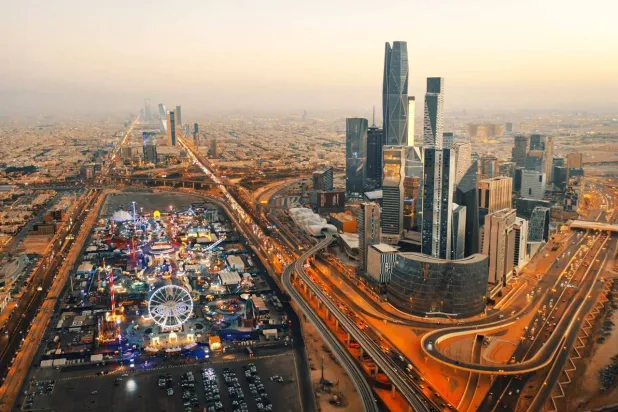
The Royal Commission for Riyadh City has completed the initial master plan for northeast Riyadh, covering about 456 square kilometers. This plan establishes a comprehensive framework for one of the capital's primary urban expansion areas for the coming decade. The strategic location of this area, connected to King Khalid International Airport, Al-Sulai Valley, Dammam Road, and Al-Janadriyah Road, gives the plan significant weight beyond merely a residential extension.
According to a statement carried by the Saudi Press Agency (SPA), the plan features an integrated land-use vision, built upon a long-term urban model. This approach allows for phased expansion and the development of fully serviced communities, ensuring a balanced mix of residential, economic, recreational, and natural uses. Minister of Municipalities and Housing Majed Al-Hogail stated that completing the plan signifies a further step in Riyadh’s urban development, emphasizing bringing housing closer to services, connecting neighborhoods with efficient transport networks, and establishing future growth centers that support economic diversification.
Rapid residential development is already underway in parts of northeast Riyadh. The Al-Fursan project by the National Housing Company (NHC) is a major contributor, covering over 35 million square meters and slated to include more than 69,000 homes. The NHC began handing over approximately 2,000 units at the start of this year. This project is designed for over 250,000 residents and will feature more than 190 educational, healthcare, sports, and recreational facilities, alongside over 6 million square meters of green space. Additionally, the area includes the East Gate project and other investment developments where deals have surpassed 5 billion riyals ($1.33 billion) for building thousands of homes and supporting facilities.
Khaled Al-Mobid, CEO of Menassat Realty Co., believes the plan will create a new development hub and distribute growth more evenly across the capital, rather than completely shifting the property market's center of gravity from north Riyadh. He noted that the plan’s success hinges on the swift delivery of roads, transport networks, and services. Al-Mobid anticipates increased early investor interest but cautioned against confusing price gains from clear implementation plans with speculative increases. Khalid Al-Jasser, a real estate developer and president of Amaken International Group, sees the plan as a broader economic signal, demonstrating the government's commitment to long-term strategic projects and a stable investment environment, thus creating opportunities for the private sector and investors. He highlighted that the project aims to establish a new urban and economic center that will generate future demand as Vision 2030 targets accelerate. Al-Jasser emphasized that the plan’s true value lies in building an economic ecosystem that integrates housing, commerce, services, and entertainment, enhancing the area’s appeal to both residents and investors. Al-Mobid identified mid-priced housing, education, healthcare, retail, and hospitality as strong investment opportunities, with office growth dependent on economic activity attraction and logistics development benefiting from proximity to the airport and Dammam Road.
Both experts agree that property valuation is evolving, with infrastructure quality, accessibility, integrated services, and project sustainability becoming more crucial than just location and land prices. Al-Mobid stated that the plan reflects Riyadh’s transition from conventional urban sprawl to integrated communities, where future property values will increasingly rely on the quality of the urban environment. Al-Jasser concluded that the plan could boost the Saudi market’s appeal to global investment funds by showcasing a clear government vision, sustained spending on major projects, and long-term growth opportunities within a stable investment environment, marking a step towards a more polycentric Riyadh where property value is shaped by planning and services as much as by location and price.
Background & context
This story sits within Saudi Arabia's broader reform agenda and efforts to grow Real estate as a pillar of non-oil GDP. The region benefits from supportive energy prices, expansionary government budgets, and rising interest from sovereign wealth funds and foreign investors.
Key numbers & facts
- The Al-Fursan project by the National Housing Company (NHC) is a major contributor, covering over 35 million square meters and slated to include more than 69,000 homes.
- This project is designed for over 250,000 residents and will feature more than 190 educational, healthcare, sports, and recreational facilities, alongside over 6 million square meters of green space.
- Additionally, the area includes the East Gate project and other investment developments where deals have surpassed 5 billion riyals ($1.33 billion) for building thousands of homes and supporting facilities.
Key points
- The Royal Commission for Riyadh City has finalized the initial master plan for northeast Riyadh, spanning approximately 456 square kilometers.
- This comprehensive framework outlines urban expansion for one of the capital's key development areas over the next decade.
- Positioned strategically and linked to King Khalid International Airport, Al-Sulai Valley, Dammam Road, and Al-Janadriyah Road, the plan focuses on integrated land use, phased expansion, and the creation of fully serviced communities.
- This initiative aims to balance residential, economic, recreational, and natural uses, fostering economic diversification and attracting investment, ultimately reshaping Riyadh's urban landscape towards a more polycentric model.
Why this matters
This matters because activity in Real estate, Aviation shapes capital flows, hiring and investor sentiment across Saudi Arabia.
Economic & market impact
Potential impact: - Real estate developers and brokers may see changing demand and pricing. - Carriers, airports and MRO providers could see traffic and capex effects.
GCC angle
For the rest of the GCC, this is a signal on the pace of activity in Real estate, Aviation. Capital flows and regulatory decisions in one Gulf state typically travel across borders given the similar economic structures and the coordination inside the GCC framework.
Risks & uncertainty
There is uncertainty around the read-through: projections can be moved by swings in oil prices, by US monetary policy tightening that most GCC central banks track via dollar pegs, and by regional geopolitical events. Headline numbers may also be revised when subsequent official data is published.
What happens next?
Watch for upcoming disclosures from listed names in Real estate, Aviation, official macro releases for Saudi Arabia, and any commentary from regulators or sovereign wealth funds. Tharwa will refresh this briefing as new public information becomes available.
Sources used
This is an original Tharwa briefing based on the available source material. Read the full article from the publisher.
Tharwa Weekly
One weekly digest of the GCC economy, companies, markets and investment opportunities — clear and concise.