Oman crude crosses $100 as aerial attacks intensify in region
Source: Oman Observer — Business
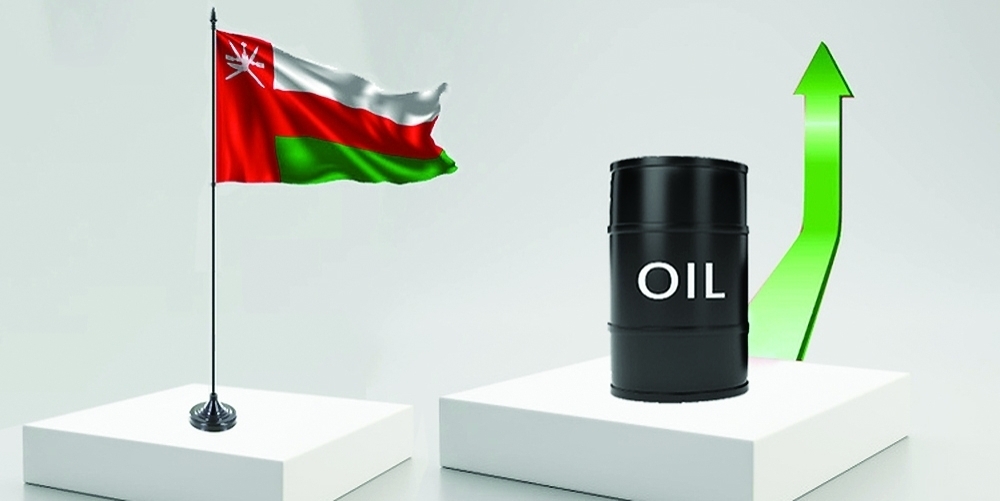
The story in brief
The Oman crude crossed the $100 per barrel mark on Wednesday to close the day's trading at $101.56, an increase of $1.57 from the previous day. The hike is in line with the global... West Texas Intermediate (WTI) 0.41% firmer at $90.62.The latest strikes between the foes has further stoked worries about inflation that has put pressure on central banks to hike interest rates, which has in turn jolted equity markets. After six months of war, the conflict remains at an impasse, with Tehran keeping the strategic Strait of Hormuz closed and Washington continuing a counter-blockade of Iranian ports.
Detailed summary
The Oman crude crossed the $100 per barrel mark on Wednesday to close the day's trading at $101.56, an increase of $1.57 from the previous day. The hike is in line with the global... The hike is in line with the global trend as the aerial military conflict between the United States and Iran has intensified since Monday.The shipping traffic on the Strait of Hormuz also continues to be disruptedIt may be noted that average monthly trading price for October 2026 has increased to $87.84 per barrel from September's price of $76.36.Crude jumped more than two percent and has spiked around 10 percent this week after the United States hit an Iranian island in the Strait of Hormuz, sparking a series of tit-for-tat attacks in which Tehran has targeted American interests in several regional countries.Oil prices rose on Wednesday, extending the previous session's surge, with Brent futures up 0.75% at $95.36 a barrel and U.S. West Texas Intermediate (WTI) 0.41% firmer at $90.62.The latest strikes between the foes has further stoked worries about inflation that has put pressure on central banks to hike interest rates, which has in turn jolted equity markets. After six months of war, the conflict remains at an impasse, with Tehran keeping the strategic Strait of Hormuz closed and Washington continuing a counter-blockade of Iranian ports. The United States carried out strikes on an Iranian island in the waterway on Sunday, with Tehran quickly retaliating by attacking US military targets in the Middle East. The exchange raised fears of a return to major hostilities, with the US president vowing to respond. "We're going to hit them hard," Trump said, according to a Fox News reporter who spoke to him briefly. "There will be a response." US officials said it hit rocket launchers on the island of Larak to prevent Tehran planting mines in the strait, while Iran targeted US forces in Jordan and the United Arab Emirates. The exchange of fire came after weeks of relative calm, with the Trump administration recently pivoting to "economic warfare". US Treasury Secretary Scott Bessent said: "We are going to continue exerting pressure, and we've had very good discussions here already." He told reporters at a G20 meeting in North Carolina that a turning point in the pressure campaign could come "within weeks or months".
Background & context
This story sits within Oman's broader reform agenda and efforts to grow Oil & Gas as a pillar of non-oil GDP. The region benefits from supportive energy prices, expansionary government budgets, and rising interest from sovereign wealth funds and foreign investors.
Key numbers & facts
- The Oman crude crossed the $100 per barrel mark on Wednesday to close the day's trading at $101.56, an increase of $1.57 from the previous day.
- West Texas Intermediate (WTI) 0.41% firmer at $90.62.The latest strikes between the foes has further stoked worries about inflation that has put pressure on central banks to hike interest rates, which has in turn jolted equity markets.
- The Oman crude crossed the $100 per barrel mark on Wednesday to close the day's trading at $101.56, an increase of $1.57 from the previous day.
- The hike is in line with the global trend as the aerial military conflict between the United States and Iran has intensified since Monday.The shipping traffic on the Strait of Hormuz also continues to be disruptedIt may be noted that average monthly trading price for October 2026 has increased to $87.84 per barrel from September's price of $76.36.Crude jumped more than two percent and has spiked around 10 percent this week after the United States hit an Iranian island in the Strait of Hormuz, sparking a series of tit-for-tat attacks in which Tehran has targeted American interests in several regional countries.Oil prices rose on Wednesday, extending the previous session's surge, with Brent futures up 0.75% at $95.36 a barrel and U.S.
- West Texas Intermediate (WTI) 0.41% firmer at $90.62.The latest strikes between the foes has further stoked worries about inflation that has put pressure on central banks to hike interest rates, which has in turn jolted equity markets.
Key points
- The Oman crude crossed the $100 per barrel mark on Wednesday to close the day's trading at $101.56, an increase of $1.57 from the previous day.
- The hike is in line with the global...
- West Texas Intermediate (WTI) 0.41% firmer at $90.62.The latest strikes between the foes has further stoked worries about inflation that has put pressure on central banks to hike interest rates, which has in turn jolted equity markets.
- After six months of war, the conflict remains at an impasse, with Tehran keeping the strategic Strait of Hormuz closed and Washington continuing a counter-blockade of Iranian ports.
Why this matters
This matters because activity in Oil & Gas, Capital Markets shapes capital flows, hiring and investor sentiment across Oman.
Economic & market impact
Potential impact: - Oil & gas majors and oilfield services may react to volume, price or policy signals. - Listed GCC equities and indices may see direct trading reaction.
GCC angle
For the rest of the GCC, this is a signal on the pace of activity in Oil & Gas, Capital Markets. Capital flows and regulatory decisions in one Gulf state typically travel across borders given the similar economic structures and the coordination inside the GCC framework.
Risks & uncertainty
There is uncertainty around the read-through: projections can be moved by swings in oil prices, by US monetary policy tightening that most GCC central banks track via dollar pegs, and by regional geopolitical events. Headline numbers may also be revised when subsequent official data is published.
What happens next?
Watch for upcoming disclosures from listed names in Oil & Gas, Capital Markets, official macro releases for Oman, and any commentary from regulators or sovereign wealth funds. Tharwa will refresh this briefing as new public information becomes available.
Sources used
This is an original Tharwa briefing based on the available source material. Read the full article from the publisher.
Tharwa Weekly
One weekly digest of the GCC economy, companies, markets and investment opportunities — clear and concise.